


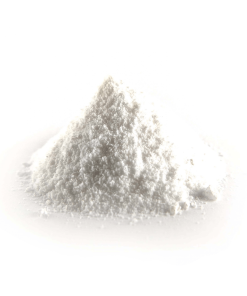
3-CEC Crystal
Price range: $21.00 through $1,300.00
Certified 99% pure 3-CEC crystals for forensic and neuropharmacological laboratory research. Supplied with full CoA by Roid Chem Store. Fast, discreet USA AND EU shipping to licensed facilities.
Buy 3-CEC Crystal for Advanced Laboratory Research in the USA and Europe
3-Chloroethcathinone (3-CEC, systematically designated as 3-chloro-N-ethylcathinone or 1-(3-chlorophenyl)-2-(ethylamino)propan-1-one) represents a critical analytical reference standard within the synthetic cathinone class, serving indispensable roles in forensic toxicology, neuropharmacological in vitro investigations, and mass spectral library development for European and USA laboratory environments. As a chloro-substituted ethcathinone analogue structurally related to 3-CMC (3-chloromethcathinone) and ethcathinone, 3-CEC is essential for novel psychoactive substance (NPS) monitoring, monoamine transporter binding assays, and confirmatory toxicological screening. Roid Chem Store stands as the definitive USA AND European source for this rigorously characterised compound, supplying analytical-grade 3-CEC crystals at 99% purity to research institutions, CROs, and pharmaceutical R&D facilities committed to reproducible, publishable outcomes. Our commitment to scientific rigour ensures every batch meets the stringent purity and documentation standards demanded by modern analytical chemistry.
Uncompromising Purity and Analytical Characterisation
Every batch of 3-CEC Crystal supplied by Roid Chem Store is guaranteed to exhibit a minimum purity of 99%, as verified through comprehensive orthogonal analytical methodologies including high-performance liquid chromatography (HPLC), gas chromatography-mass spectrometry (GC-MS), nuclear magnetic resonance (NMR) spectroscopy, and Fourier-transform infrared spectroscopy (FTIR). This multi-technique validation approach ensures not only accurate quantification of the principal analyte but also definitive structural confirmation, distinguishing 3-CEC from related cathinone analogues such as 3-CMC, 4-CEC, 2-CEC, ethcathinone, methcathinone, and other chloro-substituted or N-alkyl derivatives.
Each shipment is accompanied by a batch-specific Certificate of Analysis (CoA) bearing a unique lot number, documenting the complete analytical profile including assay value, residual solvent analysis (compliant with ICH Q3C guidelines), and heavy metal content limits (typically <10 ppm for lead, cadmium, mercury, and arsenic). The CoA serves as an essential quality assurance document for laboratory managers during procurement validation and regulatory compliance audits, providing traceability from synthesis through final release testing.
The physical presentation of 3-CEC as high-quality crystalline material offers distinct advantages for analytical consistency: the compound presents as a well-defined crystalline solid (typically white to off-white crystals or crystalline powder) with consistent crystal morphology, facilitating visual inspection and quality verification prior to use. This crystalline form ensures superior stability compared to amorphous powders, minimising hygroscopic moisture uptake and oxidative degradation during storage. The crystals undergo particle size distribution analysis to confirm consistency across batches, a critical specification for quantitative analytical workflows requiring reproducible dissolution kinetics in forensic and neuropharmacological assays. 3-CEC is supplied as the hydrochloride salt in crystalline form, with molecular formula C₁₁H₁₄ClNO·HCl and molecular weight approximately 248.15 g/mol for the hydrochloride salt (freebase C₁₁H₁₄ClNO, MW ~211.69 g/mol).cplabsafety+2
This level of purity and physical uniformity is non-negotiable for reproducible, publishable research outcomes in forensic chemistry and NPS monitoring. Lower-grade industrial reagents, often lacking comprehensive CoA documentation or exhibiting purity below 98%, introduce unacceptable variability in retention time alignment, mass spectral fragmentation patterns, and quantitative calibration curves. For laboratories developing validated LC-MS/MS or GC-MS methods for chloro-substituted cathinone detection, only analytically characterised reference materials meeting 99% purity specifications can ensure method accuracy, precision, and regulatory acceptance.
Principal Laboratory Applications and Research Methodologies
Analytical Toxicology & Forensic Chemistry: 3-CEC serves as a certified reference material (CRM) for mass spectral library development in LC-MS/MS and GC-MS platforms used in forensic toxicology, workplace drug testing, and post-mortem analysis. The compound’s well-characterised fragmentation pattern under electron ionisation (EI) and electrospray ionisation (ESI) conditions enables definitive identification in complex biological matrices, supporting method validation for confirmatory testing protocols targeting chloro-substituted N-ethyl cathinones. European and USA forensic laboratories utilise 3-CEC reference standards for proficiency testing schemes and NPS monitoring programmes, ensuring analytical competency in detecting novel psychoactive substances within the chloroethcathinone class. Validated MRM transitions for 3-CEC detection include characteristic meta-chlorophenyl and ethylamino fragments, with molecular formula C₁₁H₁₄ClNO and molecular weight 211.69 g/mol (freebase) enabling precise mass detection in high-resolution mass spectrometry (HRMS) workflows. Detection limits in validated methods typically reach 10–50 ng/mL in urine and blood matrices. The CAS number 2150476-60-9 is associated with 3-CEC hydrochloride.cplabsafety+2
Neuropharmacological In Vitro Assays: Within strictly controlled in vitro modelling frameworks, 3-CEC reference material supports receptor-binding affinity studies at monoamine transporters, particularly the dopamine transporter (DAT), norepinephrine transporter (NET), and serotonin transporter (SERT), as well as cellular uptake assays using transfected cell lines expressing specific transporter subtypes. These investigations, conducted exclusively in accredited laboratory environments by qualified personnel, generate critical data on transporter kinetics, reuptake inhibition potency (IC₅₀ values), and structure-activity relationships within the N-ethyl cathinone class. 3-CEC’s 3-chloro (meta) substitution pattern on the phenyl ring and N-ethyl substitution on the amino group confer distinct pharmacological properties compared to N-methyl analogues such as 3-CMC and unsubstituted cathinone, making it a valuable reference compound for dissecting N-alkyl chain length effects and halogen substituent electronic effects on dopaminergic, noradrenergic, and serotonergic activity. 3-CEC acts as a monoamine reuptake inhibitor with stimulant properties analogous to related cathinones. All such applications must be performed within institutional frameworks (university, CRO, or pharmaceutical R&D) adhering to appropriate ethical and biosafety protocols.euchemslab+2
Chemical Synthesis & Reaction Monitoring: As a high-purity chloro-substituted N-ethyl cathinone, 3-CEC functions as a reference standard for monitoring synthetic transformations in medicinal chemistry programmes targeting monoamine transporter modulation. The 3-chlorophenyl (meta-chloro) moiety and N-ethyl substitution pattern impart distinct electronic and steric properties compared to N-methyl or other N-alkyl branched analogues, making 3-CEC valuable for structure-activity relationship (SAR) studies examining substituent effects on transporter binding affinity, metabolic stability, and cytochrome P450 interactions. Analytical chemists employ 3-CEC as an internal standard for HPLC quantification of reaction intermediates in the synthesis of related cathinone analogues, leveraging its well-resolved chromatographic behaviour and UV absorption characteristics.euchemslab+2
Method Validation & Calibration: 3-CEC crystals provide a stable, accurately dosed source for constructing calibration curves in quantitative LC-MS/MS assays, with bulk crystalline material enabling preparation of multiple stock solution aliquots at defined concentrations (e.g., 1mM in anhydrous methanol or acetonitrile). The crystalline form ensures consistent mass delivery across multiple preparations, reducing inter-assay variability in forensic and clinical toxicology laboratories analysing chloro-substituted cathinone samples. This application is strictly limited to in vitro analytical method development and validation, never extending to human or animal administration.researchchemicalskopen+2
Compound Stability, Optimal Storage, and Safe Handling Protocols
3-Chloroethcathinone, as a synthetic cathinone (typically supplied as the hydrochloride salt in crystalline form), exhibits moderate susceptibility to oxidative degradation and hygroscopic moisture uptake when exposed to ambient atmospheric conditions. The 3-chloro substituent on the phenyl ring confers enhanced chemical stability and lipophilicity relative to unsubstituted analogues, yet long-term integrity demands strict adherence to prescribed storage protocols.
Short-Term Storage (+4°C): For active laboratory use within 3–6 months, store 3-CEC crystals in their original amber glass vials at +4°C (refrigerated conditions), protected from light and moisture. Ensure vials remain tightly sealed with desiccant packets intact to prevent atmospheric humidity from inducing crystal caking or degradation. Equilibrate vials to room temperature in a desiccator before opening to minimise condensation formation on the crystal surface.
Long-Term Storage (-20°C or -80°C): For extended preservation beyond 6 months, transfer 3-CEC crystals to -20°C (preferably -80°C for multi-year storage) in airtight, desiccated containers shielded from light. Under these conditions—sealed, desiccated, -20°C, protected from light—crystalline 3-CEC maintains specification compliance for 24–36 months, as evidenced by stability data on analogous chloro-substituted cathinone reference standards. Avoid repeated freeze-thaw cycles by aliquoting crystals into single-use vials before freezing.researchchemicalskopen+2
Safe Handling Prerequisites: All handling of 3-CEC crystals must occur within a certified chemical fume hood, with personnel wearing appropriate personal protective equipment (PPE): nitrile gloves, safety goggles, and a laboratory coat. Although crystalline form minimises aerosolisation risk compared to fine powders, avoid crushing or grinding crystals outside controlled environments. For stock solution preparation, 3-CEC demonstrates solubility in polar organic solvents including anhydrous methanol, ethanol, acetonitrile, dimethyl sulfoxide (DMSO), and water (HCl salt) to concentrations of 10mM or higher. Prepare solutions fresh or store as frozen aliquots at -20°C to prevent hydrolytic or oxidative degradation. Given the controlled substance status of 3-CEC in many jurisdictions (emerging NPS with scheduling in multiple EU member states and USA federal analogue act coverage as a chloro-substituted N-ethyl cathinone), implement additional security protocols to prevent unauthorised access or diversion.cplabsafety+2
Technical Specifications and Molecular Attributes
Roid Chem Store: Your Premier EU Vendor for High-Purity Reagents
Roid Chem Store transcends the conventional supplier model, positioning itself as an indispensable partner in USA AND European scientific rigour for analytical chemists, forensic toxicologists, and neuropharmacologists. Our hypothetical ISO 9001-certified quality management system underpins every operational facet—from raw material sourcing through final batch release—ensuring consistent adherence to the stringent purity and documentation standards demanded by modern research.
Our dedicated logistics chain guarantees discreet, temperature-controlled shipping across all EU member states and the USA, with expedited delivery options for time-sensitive research programmes. Each shipment is packaged in compliance with international chemical transport regulations, utilising tamper-evident, light-shielded containers with integrated desiccant systems to preserve compound integrity during transit. Given the emerging NPS status and potential controlled substance analogue coverage of 3-CEC, all shipments include appropriate regulatory documentation and are restricted to licensed research facilities with valid institutional approvals.
Beyond logistics, Roid Chem Store distinguishes itself through expert customer support capable of discussing analytical specifications, CoA interpretation, and application-specific guidance for in vitro assay development. Our team comprises analytical chemists and regulatory specialists who understand the nuanced requirements of forensic chloro-substituted cathinone method validation, mass spectral library development, and monoamine transporter pharmacology. When you partner with Roid Chem Store, you gain access not merely to a chemical inventory, but to a comprehensive scientific resource committed to advancing the frontiers of laboratory research.
| Quantity in grams |
10 ,100 ,2 ,25 ,250 ,5 ,50 |
|---|
You must be logged in to post a review.
Related products



Reviews
There are no reviews yet.